WHITEBARK PINE AT CASTLE
CASTLE MOUNTAIN RESORT IS PROUD TO BE ALBERTA’S FIRST WHITEBARK PINE FRIENDLY SKI AREA.
In 2026, Castle Mountain Resort became Alberta’s first certified Whitebark Pine Friendly Ski Area by the Whitebark Pine Ecosystem Foundation of Canada. Keep reading to learn more about these remarkable alpine trees and the ongoing work to protect this threatened species.
THE WHITEBARK PINE
Whitebark pines are sentinels of the fragile treeline, with some individuals living for over 1,000 years. These slow-growing, five-needle trees are a keystone species, taking 60 to 80 years to begin producing cones—and even then, only doing so every three to five years.
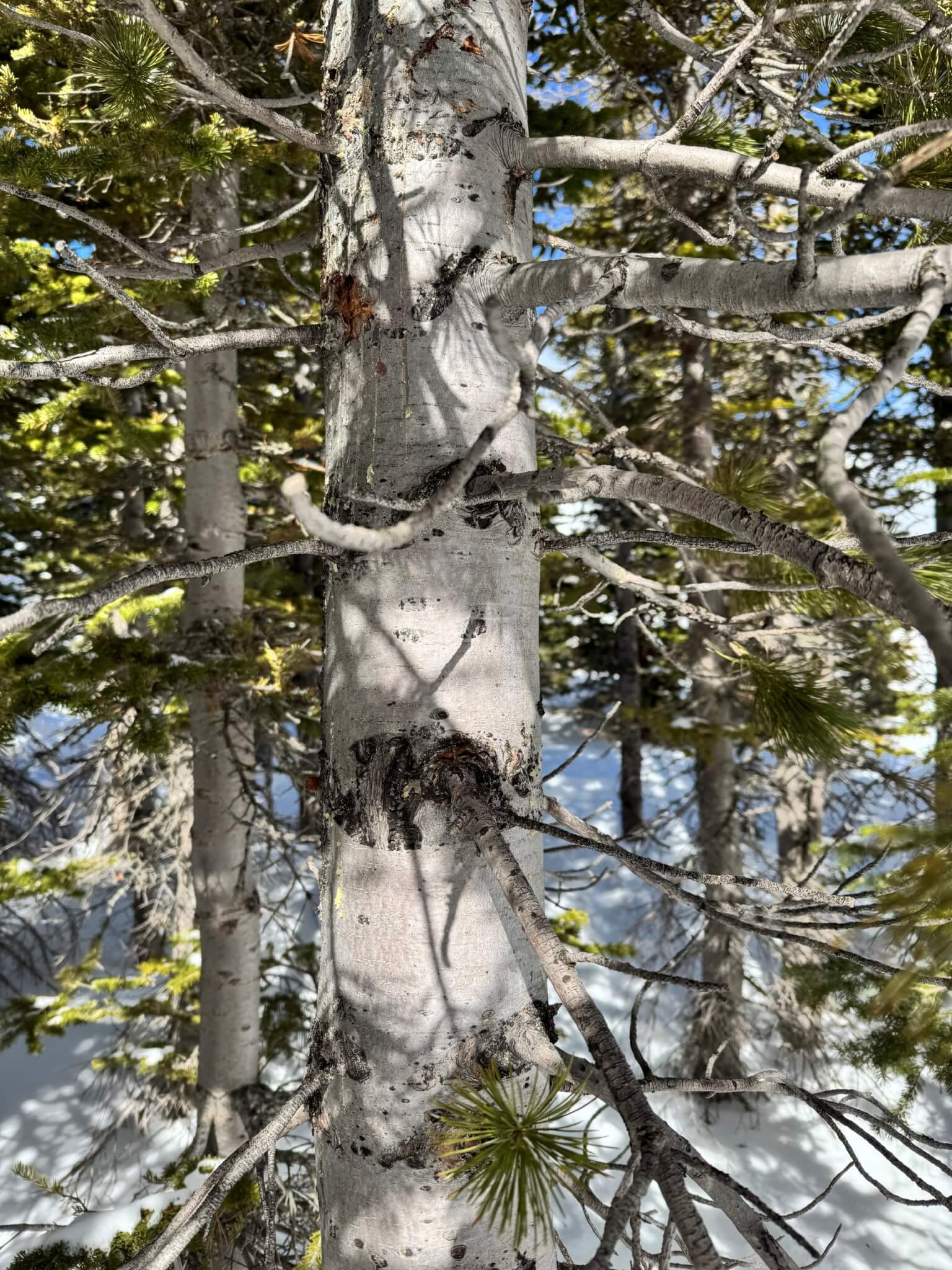
Whitebark pines are identifiable by their light grey to white bark and needles that grow in bundles of five, each measuring 3 to 9 cm long.
The seeds within these cones are large, nutrient-rich, and vital to many species, including birds, squirrels, and bears. Because the seeds are wingless, they cannot be dispersed by wind. Instead, whitebark pines depend primarily on birds—especially Clark’s nutcracker—to spread their seeds.
This relationship highlights the tree’s critical ecological role. Whitebark pine supports biodiversity, stabilizes high-elevation soils, and helps regulate snowmelt by providing shade, which in turn protects downstream watersheds. It is also one of the first species to establish after disturbances like avalanches or wildfires, helping rebuild plant communities above the treeline. For these reasons, Whitebark pine is considered not only a keystone species, but also a foundation species.
WHERE TO FIND WHITEBARK PINE AT CASTLE
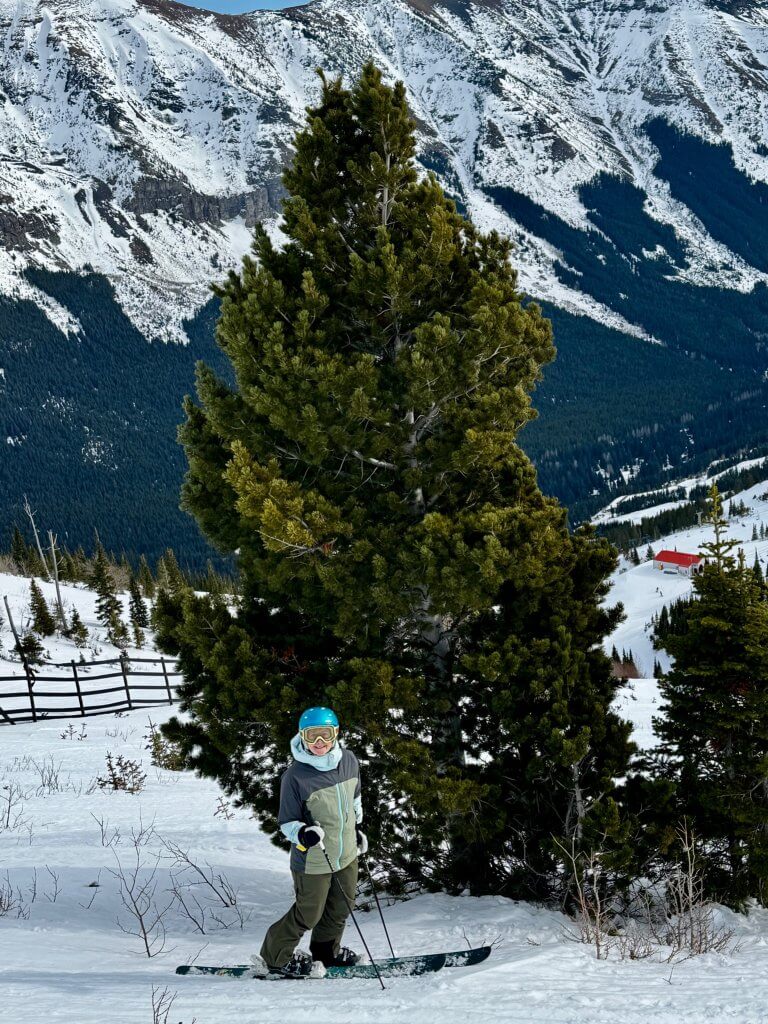
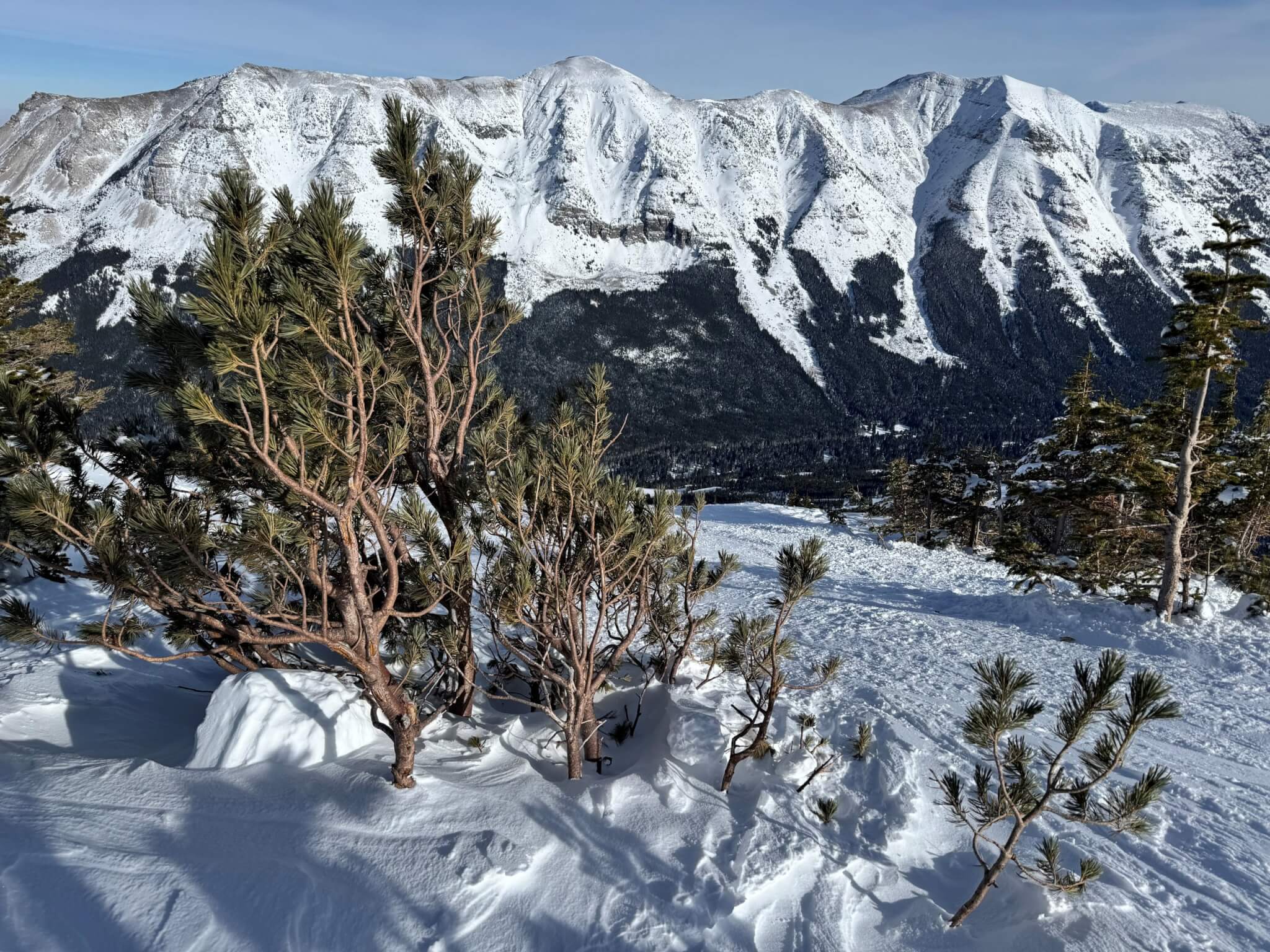
You can find Whitebark Pine trees throughout our ski area from the mountain peak down to the top of T-Rex. Striking specimens grow along both sides of Bandito and High Noon, while Drifter features everything from small, wind-shaped shrubs to large trees with broad, rounded crowns. As you traverse Lone Star, you’ll pass a particularly stately tree. About two-thirds of the way down High Rustler, looking toward Desperado, you’ll spot the healthy “Cauliflower Tree.” While riding up Stagecoach Express, look to your left between Towers 11 and 12 to glimpse the towering “Broccoli Tree.” You can also find these distinctive trees along Giddy-Up and scattered throughout the upper bowls of Mount Haig – look for their shiny bark and upswept branches.
WHAT’S HAPPENING TO THE WHITEBARK PINES?
White pine blister rust—an invasive fungus introduced to North America in the early 1900s—has spread throughout western forests. It arrived via infected trees shipped from Europe to a Vancouver greenhouse and has since had devastating effects. Today, over 90% of Whitebark pines in our area are infected. Signs include rust-colored needles, oozing blisters, and dead branches. Unfortunately, infected trees will eventually die.
However, there is hope. When rust-resistant trees are identified, their cones are collected and grown in specialized nurseries. These seedlings are then replanted in high alpine environments, helping restore this iconic species to Canada’s high-elevation forests.
Another major threat to these stunning trees is the mountain pine beetle, which has caused widespread mortality, especially in our region. To help combat this, conservationists use verbenone and green-leaf volatiles to protect the Whitebark pine from attack .

WHAT’S BEING DONE?
Partners across B.C., Alberta, and the USA are working together to restore Whitebark pine using a blend of science and traditional knowledge. The focus is on trees with natural resistance to blister rust. Seeds from these trees are collected, grown into disease-resistant seedlings, and replanted across the mountains. In some cases, cuttings from resistant trees are grafted onto younger trees in managed orchards—such as in Waterton Park—allowing them to produce cones and seeds within years instead of decades. Whitebark pine recovery is a long-term effort, and continued collaboration is key to ensuring these iconic alpine trees endure.
Castle Mountain Resort is proud to partner with the Whitebark Pine Ecosystem Foundation of Canada. They are devoted to the conservation and stewardship of Whitebark and limber pine ecosystems through partnerships, science-based active management, restoration, research, and education. The foundation leads critical efforts to protect these species by coordinating research initiatives and engaging communities in conservation work.